The method in one sentence
Scouting and Guiding use a recognisable approach, often called the Scout Method or Guide Method: young people learn by doing, in small teams, outdoors where possible, guided by shared values and supported (not directed) by adults. Every activity you see, from a game of capture the flag to a week-long expedition, is built from those ingredients.
The Promise and the Law
When a young person joins, they usually make a Promise. It is a short statement of intent, such as doing their best, helping other people and keeping the Scout or Guide Law. The Law itself is a handful of plain values: being trustworthy, kind, brave, respectful of nature. Many national organisations now offer several wordings of the Promise so that members of any faith or none can make one honestly. If this is a concern for your family, ask the leader which versions are available; it is a very normal question.
Signpost: the motto
"Be Prepared" is the motto most people know. Baden-Powell meant it broadly: prepared in mind and body to do the right thing, not only carrying a spare pair of socks.
The patrol system
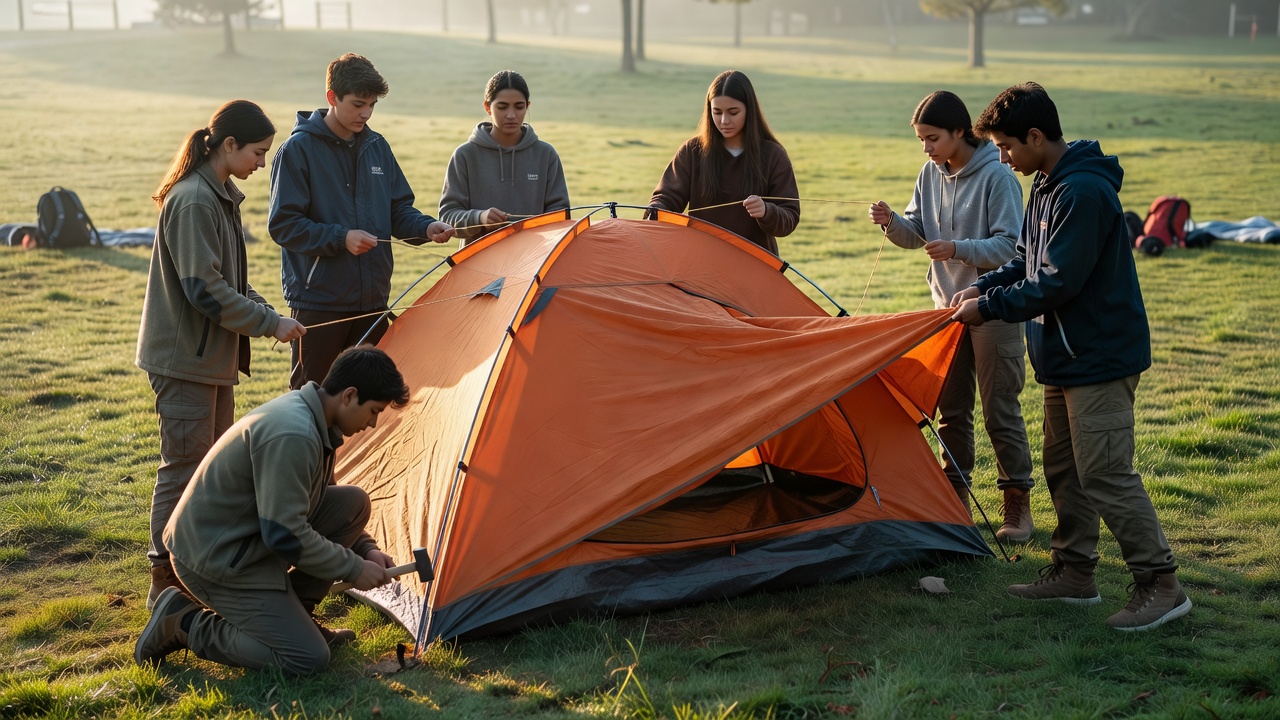
This is the heart of it. Members are grouped into small teams, typically six to eight people, called patrols (in the Guides, they are usually also called patrols; younger sections use names such as "sixes" or "lodges"). Each patrol has a young leader and an assistant chosen from among its members. Patrols plan menus, share out jobs at camp, compete in games and take responsibility for each other.
Why does this matter? Because it means a twelve-year-old regularly gets to lead, to make a decision and to live with the result. Adults step back on purpose. It can look messy from the outside, and that is the point: the learning happens in the mess.
Badges and awards
Badges are signposts, not trophies. Each one describes a set of activities in a subject such as first aid, astronomy, cooking, community service or hiking. Completing them is a way to try new things and record progress. Larger awards bring several strands together; in the UK, older Scouts and Guides can work toward the Chief Scout's or Chief Guide's top awards, and many also take part in the Duke of Edinburgh's Award, which fits naturally alongside.
The first skills a newcomer meets
Knots. A small handful covers almost everything: the reef knot for joining two ends, the clove hitch for fixing a rope to a pole, and the bowline for a loop that will not slip. Learn them with a short length of cord while watching television.
Map and compass. In Britain, members learn on Ordnance Survey maps, starting with grid references and moving to bearings. A baseplate compass is the standard tool. Later comes magnetic declination, the small difference between where the needle points and true north.
Campcraft. Pitching a tent, keeping kit dry, cooking safely on a gas stove and, where allowed, lighting and putting out a small fire properly.
First aid. From plasters and blisters in the younger sections to recognised first-aid certificates for older members and leaders.
Care for the outdoors. Most groups teach the seven Leave No Trace principles, which include planning ahead, disposing of waste properly and leaving what you find.
What you know now
The method combines learning by doing, small self-led teams, shared values and the outdoors. Badges map that learning, and a few core skills open the door to camps. Route Three looks at where all of this came from.